Learning Curve Theory Explained

Learning is a complex process, and understanding how individuals acquire new skills and knowledge is crucial for effective training and development. One valuable framework for understanding this process is the Learning Curve Theory, which suggests that the more a task is repeated, the more proficient an individual becomes. Let’s explore this theory and its implications for learning and development.
Introduction to Learning Curve Theory
At its core, Learning Curve Theory posits that as we repeat a task, our performance improves. This seems intuitive, and we often see this in practice; the more you practice a skill, the better you become. This improvement isn’t always consistent, and the relationship between time spent learning and resulting performance can vary significantly.
The Core Concepts of Learning Curve Theory
The relationship between the amount of time spent learning and the level of performance achieved is not always linear. It’s rarely a case of “more time equals more improvement” in a straight line. Instead, this relationship is often represented by a curve, the learning curve, which illustrates the rate at which learning occurs. Understanding the learning curve can be incredibly useful for modeling output, setting realistic expectations, and designing targeted training programs.
Types of Learning Curves
Learning curves can take different shapes depending on the nature of the task and the learner’s experience. Here are a few common types:
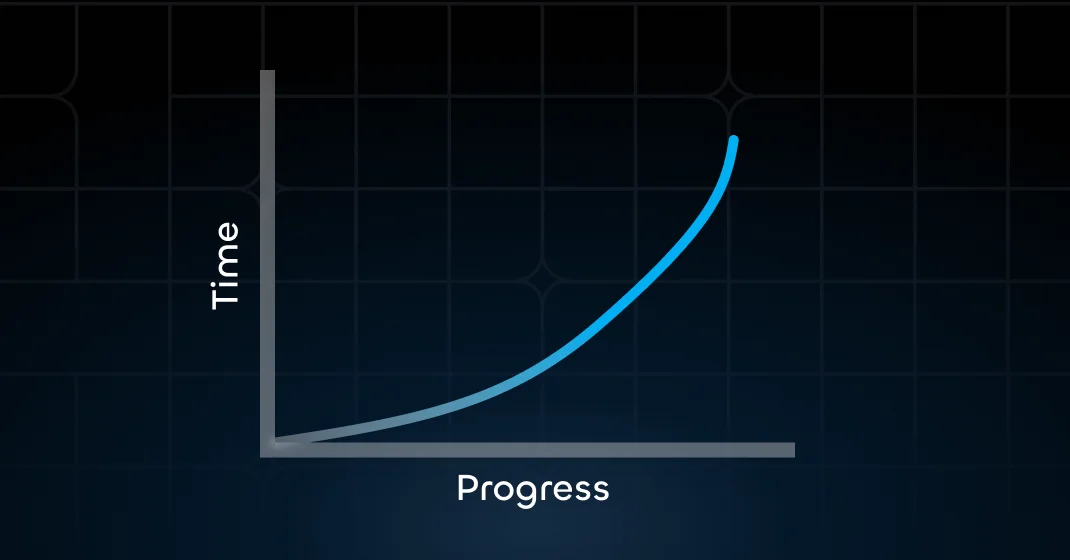
Increasing Returns Learning Curve
This type of curve shows a period of slow initial progress, followed by a rapid increase in performance once the learner grasps the fundamental concepts. It’s like learning to ride a bike: there’s a lot of wobbly uncertainty at first, but once you get the hang of balancing, your confidence and skill increase quickly.
Diminishing Returns Learning Curve
In contrast, a diminishing returns learning curve shows rapid initial improvement, followed by a gradual leveling off as the learner approaches the limits of their potential or the task’s inherent difficulty. Think of learning a new software program; you might quickly learn the basic functions, but mastering the advanced features takes significantly more time and effort for proportionally smaller gains.
The S-Curve
The S-curve combines aspects of both increasing and diminishing returns. It typically starts with a period of significant effort with little visible progress, followed by a phase of rapid improvement, and then a final plateau as performance reaches its peak. This is common in complex skill acquisition like learning a new language.
The Complex Learning Curve
Complex learning curves illustrate the reality of learning journeys over longer periods. Learners experience multiple phases of rapid improvement, plateaus, and even temporary dips in performance as they encounter new challenges or refine their techniques. This type of curve highlights the importance of ongoing support and adaptation in learning and development programs.
Applying Learning Curve Theory to L&D
Learning and development managers can use Learning Curve Theory to gain valuable insights into employee progress and optimize training programs. By tracking productivity and performance metrics, L&D can identify where employees need the most support, predict when plateaus might occur, and adjust training strategies accordingly. Understanding learning curves also allows for better resource allocation, ensuring that training efforts are focused on areas where they will have the greatest impact. In other words, you can focus on what matters.
Cognitive Learning Theories: Understanding How We Learn
Understanding the learning curve is one element to consider when creating training programs. Explore other key aspects and learning methods in our blog post, Cognitive Learning Theories: Understanding How We Learn.
Conclusion
Understanding Learning Curve Theory is essential for optimizing learning and development initiatives. By recognizing the different types of learning curves and their implications, L&D professionals can create more effective training programs, provide targeted support to learners, and ultimately, drive better business outcomes.
One Course: Empowering Efficient Learning
One Course can help streamline your learning and development efforts by providing the tools to build, manage, and track training content effectively. With features for course building and learner management, you can tailor your training programs to address specific learning curves and ensure that employees receive the right support at the right time. Plus, you can export SCORM packages for use in other LMS platforms. See how One Course handles this by signing up for a free account. There’s even a free tier available for smaller teams.